
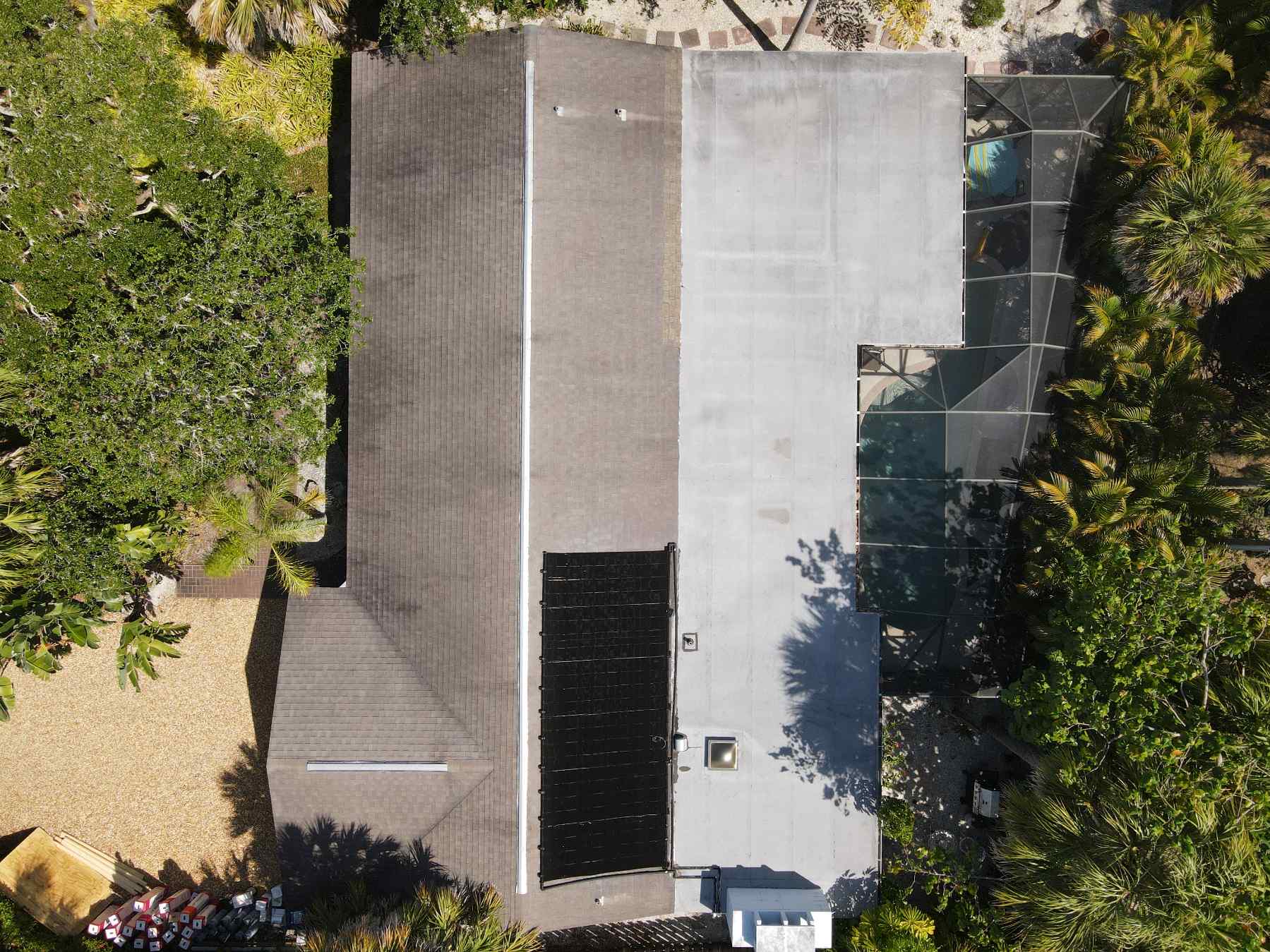
Is the flat roof on your commercial building leaking or due for a decision this budget year?
Most low-slope roofs in Sarasota, Manatee, and Charlotte counties use one of a few systems. Each one handles Florida sun and foot traffic in its own way.
This guide compares the common options, explains how to match one to your building, and lays out what each needs over its life. It’s written for owners and the people who manage their buildings, including condo boards.
TPO, Modified Bitumen, Metal, and Coatings Compared
TPO stands for thermoplastic polyolefin. It’s a single-ply sheet, usually white, with seams welded together with hot air. The white surface reflects a lot of sunlight, which helps on a building that bakes all afternoon.
Modified bitumen is an asphalt-based membrane built up in layers. It’s tough, handles foot traffic well, and has a long track record on Florida strip centers and offices. It often comes with a mineral cap sheet on top.
Metal roofs work on low slopes when the panels are designed for them. Standing seam panels shed water fast and resist wind well when they’re attached to the right spec.
Coatings are a different category. A coating is a liquid layer rolled or sprayed over an existing roof to seal it and reflect heat. It isn’t a new roof. It’s a way to extend a sound one. The Department of Energy’s cool roof guide covers reflective choices for each of these low-slope types.
We also install EPDM, a rubber membrane, on some buildings. Our commercial roofing page lists every system we work with.
Matching the System to the Building and Its Use
The right system starts with how the building gets used, not with the brochure.
A restaurant with grease exhaust on the roof needs a membrane that stands up to oils. A warehouse with a dozen HVAC units needs walk pads and a surface that shrugs off service traffic. A medical office with sensitive equipment inside needs the most dependable seams you can buy.
Structure matters too. Some older buildings can’t carry extra weight, so adding layers or heavy materials may be off the table. Roof drains, parapet walls, and the slope toward the drains all shape the choice.
Then there’s the insurance and code side. Florida’s high-wind rules affect how a roof has to be fastened at the edges and corners. A permit is required for most replacements, and each county’s building department has its own checklist. Charlotte County lists its steps on the commercial roof permit page. Confirm the details for your property with the local building department.
Smaller low-slope areas on homes follow similar logic. Our flat roof page covers those.
Service Life and Maintenance Demands by System
Every flat roof needs attention. The difference is how much and how often.
We generally expect a flat roof to last about 15 to 25 years. Where a specific roof lands in that range depends on the material and how well it was installed and kept up. Membrane thickness matters. Manufacturer warranties often run longer on thicker sheets.
TPO needs its seams checked, especially around curbs and penetrations. Modified bitumen needs attention at laps and flashings, and cracked areas should be patched before water gets under them. Metal needs fasteners, sealants, and trim checked, plus prompt care for any rust spots. A coating needs to be inspected and topped up over time, since it wears as the sun hits it.
The common thread is the drains. Ponding water, meaning water that sits for days after a storm, speeds up wear on almost any system. Clear the drains and scuppers after big storms and before hurricane season.
A written maintenance plan keeps this from sliding. We offer maintenance plans for commercial roofs, and our recent work shows the kinds of buildings we care for.
Frequently Asked Questions
Which flat roof system performs best in Florida heat?
Light-colored, reflective surfaces tend to run cooler, which eases the load on the building’s air conditioning. White TPO does this out of the box. Modified bitumen can use a reflective cap sheet, and many roofs can take a reflective coating. The ENERGY STAR cool roofs page explains how reflective roofs are rated. In our climate, drainage and seam quality matter as much as color.
How thick should a TPO membrane be on a commercial building?
TPO is commonly sold in 45, 60, and 80 mil sheets. A mil is a thousandth of an inch. GAF’s EverGuard TPO data sheet lists longer warranty terms for thicker sheets. Heavier roof traffic, more equipment, or a longer hold on the building all point toward a thicker membrane.
Can a coating be applied over an existing modified bitumen roof?
Often, yes, if the roof is dry and sound. The surface has to be cleaned first. Asphalt can bleed through some coatings, so a blocking primer usually goes down first. GAF’s guide to silicone over asphaltic roofs says any wet membrane or insulation must be replaced before coating.
Specifying the Right System for Your Property
A good flat roof decision starts with a close look at your current roof. That means the membrane, the flashings, the drains, and what’s happening in the insulation underneath.
From there, the choice narrows fast. Some buildings need a full replacement. Some need targeted repairs and a maintenance plan. A few may be good candidates for a coating from a specialist, and we’ll tell you if that’s the case.
We work on commercial buildings across Sarasota, Manatee, and Charlotte counties, from Bradenton and Lakewood Ranch to Venice, North Port, and Port Charlotte. We offer free commercial inspections and emergency repair. When you call, you’ll speak with a team member, not a call center. You can read about our team on the About Us page.
Every project has a dedicated foreman, so your property manager has one person to reach on site. That matters when tenants are working below.
Ready for a straight answer on your building? Reach out to Pelican Roofing FL and schedule a free commercial roof inspection.