
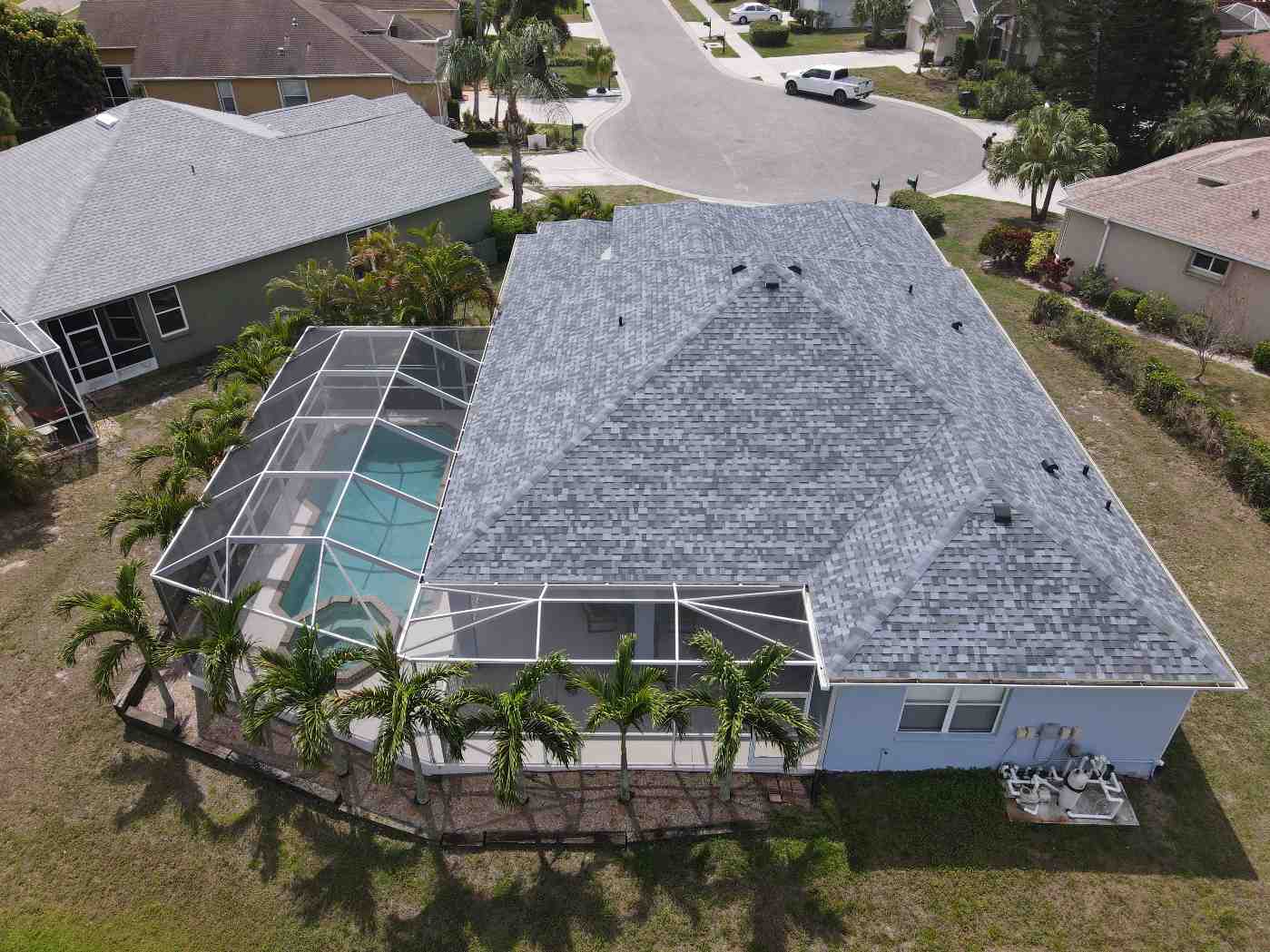
Is your roof old enough that you’re starting to wonder how much time it has left?
Florida weather is hard on a roof. Strong sun, heavy summer rain, salt air near the coast, and hurricane wind all wear them down.
The good news is that a tired roof usually gives warning signs before it fails. Some you can spot from the driveway. Others only show up in the attic.
What You Can See From the Ground
Start with a slow walk around the house on a sunny morning. Bring binoculars if you own a pair. Stay off the roof.
On a shingle roof, look for edges that curl up or corners that lift. Bald patches where the colored granules have worn away are another sign. So are piles of granules at the bottom of your downspouts. Missing shingles after a storm are worth a call on their own.
On a tile roof, look for cracked or slipped tiles. Tile often looks fine from the ground while the underlayment beneath it wears out, so age matters as much as appearance.
On a metal roof, watch for rust at fasteners and seams, or panels that have lifted.
Check the roof line too. A ridge that dips or a slope that sags can point to a weak deck.
Then look at the gutters and fascia. Rot along the roof edge often means water has been getting behind the drip edge for a while.
What Only Shows Up in the Attic
The attic tells the truth about a roof. Go up on a bright afternoon with a flashlight, and step only on the framing.
Turn off the flashlight first and look up. Daylight coming through the roof boards means gaps where water can follow.
Next, look for dark stains on the underside of the plywood or on the rafters. Fresh stains feel damp. Old ones may be dry but still mark the path of past leaks. Check around vents, chimneys, and valleys, where two slopes meet.
Press gently on any stained area. Soft or spongy wood is a sign of rot.
Look at the insulation. Wet, matted, or moldy spots are a warning. A musty smell is one too.
Heat and moisture build up fast in a Florida attic. The ENERGY STAR guide to attic ventilation explains how good airflow moves hot air out and helps protect shingles. It also warns never to cover soffit vents with insulation. If your attic feels like an oven and the vents look blocked, the roof has likely been aging faster than it should.
Age Ranges by Material in the Florida Climate
Age isn’t the only test, but it’s a strong clue. These are the typical ranges we publish for roofs in our area.
Shingle roofs last about 20 years. Tile roofs last 25 to 30 years with care. Metal roofs can last 50 years or more with maintenance. Flat roofs usually last 15 to 25 years. Worthouse metal tile is listed at 40 to 70 years.
Where your home sits changes the math. A roof on Anna Maria Island or in Englewood faces more salt and wind than one inland in Parrish or North Port. How well the attic breathes plays a part too.
Insurers watch age closely. Citizens, for example, uses separate age limits for shingle roofs and for tile or metal roofs, and asks for proof of remaining life past those ages. Its inspections page explains the rules. Other carriers set their own, so check with your agent.
If you don’t know your roof’s age, your county’s permit records may show when it was last replaced.
Frequently Asked Questions
How long does a shingle roof last in Southwest Florida?
About 20 years is a fair expectation here. Heat and storms shorten that compared with milder climates. Good attic ventilation and quick repairs after storms help a shingle roof reach the full range. Salt air near the coast and poor airflow in the attic push it the other way. An inspection will tell you where yours stands.
Are dark streaks on a roof a sign of failure or just algae?
Usually algae. The Asphalt Roofing Manufacturers Association names Gloeocapsa magma as the most common cause of dark streaks. It’s mostly a looks problem. ARMA warns against pressure washing or scrubbing, since that can strip granules. Streaks paired with curling or bald spots are a different story and deserve an inspection.
Should I have my roof inspected if I see no leaks?
Yes. Roof damage often starts long before water reaches a ceiling. Underlayment wears out and flashing loosens where you can’t see it. An inspection before hurricane season catches those problems while they’re still small. It also gives you a written record if your insurance carrier asks about the roof’s condition.
Booking a Free Inspection Before the Next Season
The best time to learn your roof’s condition is before a storm tests it. The National Hurricane Center marks the Atlantic season as June 1 through November 30, so spring is a smart window for a checkup.
Pelican Roofing FL offers free roof inspections across Sarasota, Manatee, and Charlotte counties, from Longboat Key to Punta Gorda Isles. We’ll tell you what we find in plain terms. Sometimes that means ongoing roof maintenance. Sometimes it means a small repair. You’ll get a clear answer either way.
When the roof has truly reached the end, a roof replacement with us is run by a dedicated foreman. Most residential projects are done within three days, and each complete replacement includes a free wind mitigation report. When you call, you speak with a team member, not a call center.
Don’t wait for a stain on the ceiling to tell you. Reach out to Pelican Roofing FL and book your free roof inspection before the next season starts.