What Is the Third Nail?
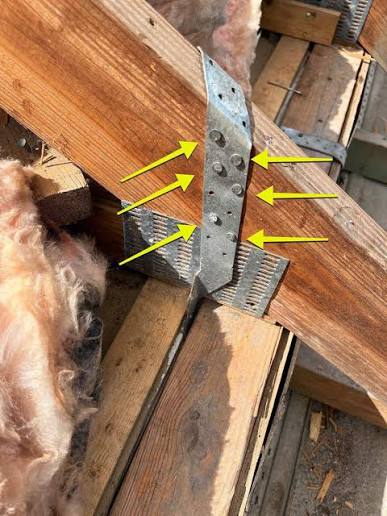
Hurricane straps are the metal connectors that tie your roof structure to the walls below. They’re one of the most important connections in your home during a high-wind event. But not all strap installations are created equal — and the number of nails securing that strap can make a meaningful difference.
Many older Florida homes were built with straps fastened using only two nails. Adding a third nail to a qualifying strap strengthens that roof-to-wall connection and, in many cases, can improve how your home is classified during a wind mitigation inspection.
It’s a small detail. It can also be one of the most cost-effective upgrades a Sarasota-area homeowner makes.
 Why It Matters
 Why It Matters
When high winds move across a roof, they create uplift — a lifting force that pulls the roof structure away from the walls. The roof-to-wall connection is what resists that force. A stronger, better-fastened connection helps your home perform better under pressure.
Florida insurers recognize this. Wind mitigation inspections evaluate roof-to-wall attachments as one of the key credit categories, and stronger connections may qualify for better ratings. That’s why the third nail comes up so often in conversations about insurance and roof replacement.
When We Can Address It
The best time to evaluate and improve roof-to-wall connections is during a roof replacement. With the roof deck open, our team can inspect existing straps, identify which ones qualify for an additional fastener, and install it correctly the first time — before the new roof goes on.
Doing it later means opening the roof back up. Doing it during your replacement means no additional disruption, no second project, and no second trip.
Not Every Home Qualifies the Same Way
We want to be straightforward with you: the third nail isn’t a guaranteed insurance discount, and it doesn’t apply to every home.
Eligibility depends on several factors:
The existing connector. Some straps are designed for an additional fastening point; others are not.
Installation conditions. Framing access, strap positioning, and existing conditions all affect what’s possible.
Your wind mitigation inspection. The final determination is made by your inspector and your insurance carrier — not by us.
What we can do is identify the opportunity, install the work correctly, and document it clearly so your inspector has what they need.
Licensing Matters
This is important, and it’s often overlooked.
Hurricane strap and roof-to-wall connector work frequently requires a General Contractor license or equivalent — not just a roofing license. Not every roofing company can legally perform this work.
Pelican Roofing FL holds both. Our Roofing Contractor license and our Residential Contractor license mean we can handle strap work in-house, correctly, and in full compliance with Florida requirements. No subcontractor handoffs. No scope gaps. No work performed outside the bounds of a license.
Ask Us About It
If you’re planning a roof replacement, ask us to evaluate your existing roof-to-wall connections. We’ll tell you what we find, explain what’s possible, and give you a straight answer about whether the third nail makes sense for your home.
No pressure. No overselling. Just the information you need to make a smart decision about your roof and your insurance.